Households face a fresh energy bill threat as gas prices hit three-year high

Gas prices have soared to a three-year high and oil prices increased further as the Middle East conflict escalates.

Attacks on energy sites in Iran and Qatar were followed by threats from US President Donald Trump to “massively blow up” a key Iranian gas field.

UK natural gas prices spiked by more than 124% month-on-month and 65% up year-on-year, the highest level since the conflict escalated at the end of February. [1]

While the FTSE100 is trading down 1.9% shares in energy firms have risen, taking share price gains by these firms since the conflict started to close to 10%. [2]

A spokesperson for the End Fuel Poverty Coalition, commented:

“These gas and oil prices haven’t been seen since the winter of 2022/23 when an Energy Price Guarantee was needed to protect households from the worst excesses of our exposure to global markets. The reality is that households will face a ‘Trump Tax’ on their energy bills as a result of this war and the case for Government action to support households is becoming impossible to ignore.

“We have written to Ministers with proposals to ensure support reaches the households most exposed to high energy costs first, while giving Government the ability to scale up help quickly if the crisis continues.

“That means immediate support for households relying on heating oil, LPG and other off-gas fuels, help for heat network customers facing rising commercial energy prices, and targeted reductions in energy bills from July when the price cap rises. It also means faster action on energy debt, stronger winter support through the Warm Home Discount and reformed Cold Weather Payments, and an overhaul of electricity pricing so households are not left paying more than they should.

“These are practical steps that can protect people now while complementing longer-term plans such as the Warm Homes Plan and moves to renewables, which are essential to bringing bills down for good.”

Jess Ralston, Head of Energy at the Energy and Climate Intelligence Unit (ECIU), said:

“This will be a major concern to bill payers, many of who are still carrying debt from the last gas crisis when Russia invaded Ukraine. That led to taxpayers having to step in essentially subsidising gas for millions of homes to the tune of tens of billions. And let’s be clear trying to squeeze more gas out of the North Sea has no real impact on the price households pay because its set by international markets and these kind of world events caused by foreign actors like Putin.

“Put simply, if you want to insulate yourself from these kind of price shocks, use less gas. British wind and solar farms lower our dependence on foreign gas, as do net zero technologies like electric heat pumps and this helps with bill stability. British wind power lowered wholesale prices by a third last year. These are permanent solutions, whereas the North Sea is a mature basin running out of oil and gas, quicker drilling means it runs out quicker.”

[1] Trading Economics, 0930 Thursday 19 March.

[2] Bloomberg data on End Fuel Poverty Coalition share price watch list of 15 listed firms involved in the UK energy sector.

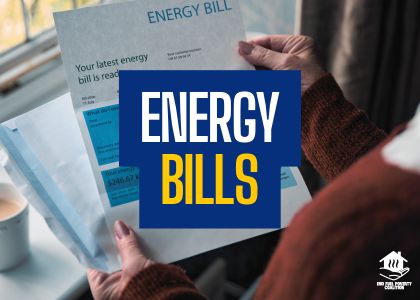
Wet weather, rising bills and cold homes are putting lung health at risk

New warnings from Asthma + Lung UK show how wet weather and the threat of higher energy bills are combining to put people with lung conditions at greater risk.

The charity says damp and mould can trigger asthma attacks, chest infections and hospital admissions, while 17% of people with lung conditions say they struggle to keep their home adequately warm.

That warning comes as evidence continues to mount about the health impact of poor housing. Separate figures reported in the Independent suggest that in 2024 there were just under 40,000 NHS hospital admissions where cold homes, damp, mould or poor housing conditions were recorded as contributing factors to serious respiratory and cardiovascular illness.

But there is also clear evidence that home upgrades can improve health. A recent case study in York highlighted how energy efficiency improvements helped an older resident end years of breathing difficulties and financial stress, stay warmer and feel better at home.

A spokesperson for the End Fuel Poverty Coalition, said:

“For people with asthma, COPD and other lung conditions, a cold, damp home can be dangerous to their health.

“After one of the wettest winters on record, many households are already dealing with damp and mould. Now the oil and gas price crisis is raising the threat of higher bills, which could leave even more people cutting back on heating or unable to keep their homes dry and safe.

“Ministers need to act on two fronts at once. They must get the Warm Homes Plan moving for the coldest and dampest homes, and make sure emergency bill support is ready if this fossil fuel price crisis deepens. This includes targeting any financial support available at those who have long-term lung problems as one of the priority groups.

“No one should be made ill because they cannot afford to heat their home.”

Dr Andy Whittamore, a GP and clinical lead at Asthma + Lung UK, said:

“Even before events in the Middle East raised the spectre of higher energy bills, we were already concerned about the wet weather increasing damp and mould and affecting people’s health.

“For the seven million people in the UK living with asthma and the three million people living with COPD being exposed to a trigger like mould can bring on a potentially fatal asthma attack, or cause a COPD flare-up requiring hospitalisation.”

Ministers must learn lessons from the last energy crisis

The energy industry has warned that the UK must prepare now for another energy price shock as volatility in global fossil fuel markets continues.

In a new briefing, A Better Approach to Energy Bill Support, Energy UK says government should develop plans to support households if bills rise again later this year. Some analysts suggest typical annual energy costs could increase by around £300, with higher rises possible if global tensions continue.

The report argues that the UK should learn lessons from the last crisis, when universal support schemes cost more than £35bn. Instead, future support should be better targeted at households most in need, while any universal measures should focus on lowering electricity costs.

Energy UK is calling for a rapid taskforce involving government, industry and civil society to improve targeting systems and ensure support can be delivered quickly if prices rise again.

The warning comes as wider debate continues about how best to protect households from energy price shocks.

New analysis from the University of Oxford’s Smith School found that a fully renewable UK energy system could cut household energy bills by up to £441 a year. In contrast, maximising oil and gas extraction from the North Sea would save households between £16 and £82 a year, but these savings would only be realised if the tax revenues from extra drilling were redistributed directly to households.

Dr Anupama Sen, co-author of the analysis, said claims that North Sea drilling would significantly reduce household bills were “sheer fantasy”.

A spokesperson for the End Fuel Poverty Coalition said:

“Energy prices are once again being driven by instability in global fossil fuel markets and households are being left exposed to the consequences.

“Millions of families are still recovering from the last energy crisis, with record levels of energy debt and many already struggling to afford today’s bills. Without action, another price spike could push even more households into fuel poverty.

“We support calls for the Government to convene a taskforce and prepare an emergency energy support framework that can protect those most at risk while prices remain volatile. That means targeted bill support, more help for households using LPG, heating oil and heat networks, plus urgent action to tackle the legacy of energy debt.

“But this crisis also reinforces the long-term lesson: as long as the UK remains dependent on expensive oil and gas, households will remain exposed to global shocks. That means we need action to bring down energy usage via building upgrades as well as action to bring down electricity prices through market reform and more renewables.”

Heating oil households to receive support as ministers consider market crackdown

The Prime Minister has announced a £53 million support package to help vulnerable households that rely on heating oil as global fossil fuel prices surge following conflict in the Middle East.

The Government says the funding will provide targeted support to households most exposed to rising costs, while also signalling that ministers may consider stronger regulation of the heating oil market. In England, it is expected to be available via the local authority-delivered Crisis Resilience Fund.

However, details on eligibility, delivery and how the scheme will operate across Scotland, Wales and Northern Ireland have yet to be published.

Ministers have also signalled that stronger oversight of the heating oil market may be introduced, with the Competition and Markets Authority asked to monitor prices closely and act if companies exploit the current crisis.

A spokesperson for the End Fuel Poverty Coalition commented:

“This announcement recognises that households who rely on heating oil are uniquely exposed to fossil fuel price shocks, the market lacks the consumer protections seen elsewhere in the energy system and government intervention is necessary when prices surge.

“The targeted support and steps towards stronger protections are welcome. However, the financial help announced today is relatively limited and will take time to reach households that are suffering now. We also need more details about eligibility and how the scheme will work in Scotland, Wales and Northern Ireland.

“If prices remain high ministers will need to go further with a stronger Alternative Fuel Support Scheme to ensure off-gas-grid households – including those in park homes, care homes and on heat networks – are properly supported.

“The longer-term solution must be helping oil-heated homes to move away from expensive fossil fuels through insulation, alternative heating systems, heat pumps and community energy so households are not repeatedly exposed to global energy shocks.

“We would also urge Ministers to talk to charities, advice providers and experts now about the measures that may be needed from 1 July after the current price cap protection ends.”

Caroline Abrahams CBE, charity director at Age UK, said:

“We welcome the Government’s recognition that households using heating oil require support, and it’s good that funding will be made available. However, we need to see the detail on how this will be delivered, and our strong sense is that £53 million is unlikely to match the scale of the challenge, given the number of households affected, many of them headed by older people who are already struggling with ongoing cost-of-living pressures.

“It’s also important to recognise that there are other groups of older people who are also facing immediate price rises – including some heat network consumers, park home residents and care home residents – who are not covered by this plan.

“For context, even before prices started rising because of the war, nationally representative polling commissioned for Age UK found that this winter one in three people aged 66+ (35%) – around 4.2 million – had recently cut back on heating or powering their homes. The clear implication is that many older people simply cannot cope with another increase in energy costs.

“We believe the Government should go further than has been announced today. Local authorities need sufficient resources and flexibility to respond quickly when people face sudden financial crises, and the scale of support on offer must reflect the level of need we’re seeing among older households.”

Government warns suppliers over heating oil prices

The cost of heating oil has surged sharply over the past two weeks as conflict in the Middle East pushes global oil markets higher.

Data suggests that the cost of filling a heating oil tank has doubled in less than 14 days. [1]

Unlike households using gas or electricity, homes heated by oil are not protected by the energy price cap, meaning global price shocks are felt almost immediately.

Around 1.5 million households across the UK rely on heating oil, with particularly high levels in rural areas and in Northern Ireland where the majority of homes use oil for heating.

In the past 48 hours, ministers have signalled growing concern about the impact of rising oil prices on household bills.

During a visit to Belfast, the Prime Minister warned heating oil suppliers that prices must be “fair, transparent and justifiable”, saying the Government “will not tolerate profiteering” as global tensions push energy costs higher.

The Government has also asked the Competition and Markets Authority (CMA) to keep heating oil prices under close scrutiny alongside petrol and diesel prices.

Separately, the Chancellor and Energy Secretary have held talks with fuel retailers in Downing Street, warning companies not to exploit global instability by increasing margins.

A spokesperson for the End Fuel Poverty Coalition, commented:

“It is right that the Government is asking the Competition and Markets Authority to keep a close eye on heating oil prices as global tensions drive up costs.

“Homes that rely on heating oil sit completely outside the energy price cap. That means as global oil markets spike, families in rural and off-grid homes have seen the costs they are expected to pay more than double in less than two weeks.

“While transparency and scrutiny are essential to ensure households are not being overcharged, it is becoming increasingly clear that the Government may have to act in the weeks ahead to provide further protections and support for these households. Longer term, the lesson is clear: leaving so many homes dependent on volatile fossil fuel markets exposes them to repeated price shocks.”

[1] Data from BoilerJuice shows a price of 63.1p per litre on 1 March has risen to 128.1p per litre on 13 March.

Fossil fuel price spike could cost UK more than entire net zero transition

The UK could face far greater costs from future fossil fuel price shocks than from the transition to clean energy, according to new analysis from the Climate Change Committee (CCC).

The independent climate advisers say a single energy price spike similar to the one triggered by Russia’s invasion of Ukraine in 2022 could cost the UK economy around £222 billion, roughly double the total net cost of moving to net zero between now and 2050.

The findings come as oil and gas prices have surged again since the start of the American / Israeli attacks on Iran and conflict in the Middle East, underlining the risks of relying on globally traded fossil fuels.

A spokesperson for the End Fuel Poverty Coalition said:

“Households have already learned the hard way that fossil fuel price shocks come with a very real cost.

“With oil and gas prices already surging again because of the conflict in the Middle East, families are being reminded just how exposed the country remains to volatile global markets. If these higher prices persist, we are likely to see a fresh hike in energy bills from 1 July as the impact feeds through to the next price cap.

“It remains to be seen how severe the current price spike will be for households, but it underlines that the only lasting protection is to cut our reliance on fossil fuels through better insulated homes, homegrown renewable energy and fairer energy pricing so bills are no longer dictated by global gas markets.”

Scrapping home upgrade funding could leave households at greater risk

The leadership of Reform staged a petrol station stunt promising cheaper fuel and energy bills by attacking what they call “green levies” which are used to long-term heating and energy efficiency programmes.

As global gas prices surge following the conflict with Iran, the stunt highlights how Britain’s continued dependence on oil and gas leaves households exposed to global price shocks.

A spokesperson for the End Fuel Poverty Coalition, which campaigns to lower home energy costs, said:

“Scrapping support for heat pumps and energy efficiency programmes would lock the country into a continued cycle of high energy prices and fuel poverty.

“The reason households are facing rising costs today is because the country remains heavily dependent on oil and gas whose prices are set on volatile global markets.

“As the conflict in the Middle East shows, when tensions rise anywhere in the world the price of gas quickly follows. That is what pushes up energy bills, not investment in cleaner heating.

“The real way to cut bills for working people is to reduce the amount of gas we burn through better insulated homes, expand homegrown renewable power and reform energy pricing so households are no longer exposed to constant gas price shocks.

Robert Palmer, deputy director of campaign group Uplift, added:

“It’s clear that the only route to lower bills and secure energy is to free ourselves from oil and gas through homegrown renewable energy and upgrading homes, whether that’s with solar panels or heat pumps. This is just common sense in today’s world

“New North Sea drilling will make no difference to UK energy bills and have no meaningful impact on the UK’s supply of gas.”

Heating oil prices surge as conflict pushes up costs for off-gas homes

The cost of heating oil continues to surge due to the Middle East conflict, now hitting levels not seen since the early days of the Ukraine invasion. Reports from some customers suggest that 1,000 litres now costs almost £985, compared to £670 in January.

During the height of the last price spike, the government recognised that off-gas-grid homes were exposed to fuel price spikes and weren’t covered by the Energy Price Guarantee, so it introduced the separate Alternative Fuel Payment – a £200 one-off payment for households using fuels such as heating oil, LPG or biomass.

A spokesperson for the End Fuel Poverty Coalition, said

“Households that rely on heating oil are often some of the most exposed to global fossil fuel price shocks because they sit outside the energy price cap.

“These homes are also those that are among the deepest fuel poverty as the cost of home improvements which could help reduce the cost of energy can be prohibitive.

“This means that when overseas conflicts send oil prices soaring, the cost of heating for families in rural and off-grid homes can jump almost overnight.

“While other households are protected by the energy price cap for now, homes heated by oil are starting to suffer now and may need urgent support.

“This is another harsh reminder that relying on volatile fossil fuel markets leaves households vulnerable. The long-term answer has to be looking at alternative heating systems and creating warmer homes by supporting people who need to improve energy efficiency.”

Meanwhile early signs suggest energy suppliers are once again increasing exit fees on fixed tariffs.

These charges, which households must pay if they leave a fixed deal early, surged during the last energy crisis as suppliers tried to protect themselves from volatile wholesale markets. In some cases exit fees climbed to more than £100 per fuel, making it expensive for households to move supplier even when cheaper deals became available.

Campaigners warn the same pattern could now be repeating. If exit fees rise again, households who fix their tariff to gain certainty could find themselves stuck in poor value deals or tied to suppliers providing weak customer service, simply because the cost of leaving becomes too high.

A spokesperson for the End Fuel Poverty Coalition told the Telegraph:

“Every time the global gas market starts to spike, exit fees creep up. What should be a simple choice about fixing your bill risks becoming a trap that locks households into expensive deals or with poor customer service. Ofgem should act quickly to implement an exit fee ceiling to help protect consumers.”

Energy bills set to rise again in summer as global gas tensions bite

As conflict in the Middle East continues and Qatari production of LNG gas unlikely to restart soon, analysts at Cornwall Insight expects that energy bills will increase from 1 July by 10% to around £1,800 for the average household.

Members of the End Fuel Poverty Coalition predict that this will be at the lower end of predictions, if the conflict is not resolved in the coming days. After falling back from early morning extreme highs during trading yesterday, gas prices are sitting 26% up year-on-year (as at 0930 5 March).

A spokesperson for the End Fuel Poverty Coalition commented:

“The latest projections are devastating for households who had been expecting some relief on energy bills.

“Summer normally brings some respite for households because wholesale prices tend to ease as heating demand falls. So the prospect of bills rising by around 10% in July is a worrying sign that global tensions are once again feeding directly into energy costs.

“If these forecasts prove correct, the increase would wipe out the savings delivered by the Budget and pile even more pressure onto families already struggling. Energy debt is already at record levels, and millions of people remain in cold, damp homes after years of high bills.

“The deeper problem is that the UK is still dangerously exposed to volatile fossil fuel markets. As long as our energy system remains tied to global gas prices, shocks like this will continue to hit household finances.

“At the same time the energy industry stands to benefit from the crisis. It’s obscene that as bumper profits are predicted from the fresh energy crisis, some are calling for an early end to the Windfall Tax.

“Ministers must ensure the system works for consumers, not just for the fossil fuel giants, and deliver more homegrown renewables, better insulated homes and fairer energy pricing.”

Scottish Ministers step up attacks on energy Windfall Tax

The debate over the UK’s windfall tax on oil and gas companies has reignited after Scotland’s First Minister called for the levy to be scrapped. He joins his Scottish Government colleagues in putting pressure on UK ministers after lobbying from the energy industry.

Citing uncertainty caused by conflict in the Middle East, John Swinney said the Energy Profits Levy is harming investment and jobs. But with global gas prices rising again (57% increase month on month as per market data at 1400 on 4 March) and energy companies continuing to post strong profits, campaigners argue weakening the tax would not help households already struggling with high bills.

A spokesperson for the End Fuel Poverty Coalition, commented:
“Conflict in the Middle East and rising global gas prices show exactly why the Windfall Tax remains necessary, not why it should be scrapped. When geopolitical tensions push up prices, energy companies and their shareholders benefit while households face another round of higher bills from 1 July.

“Energy firms have made tens of billions in UK profits in recent years even with the Energy Profits Levy in place, so the idea that removing it will suddenly make energy cheaper or more secure simply doesn’t stand up. The North Sea is declining because of the geology of an ageing basin, not because companies are paying a fair share of tax.

“Instead of handing the industry a tax break, governments should be using these revenues to cut bills, tackle energy debt, support workers through the transition and invest in warm homes and clean energy so households are protected from exactly this kind of global price shock.”