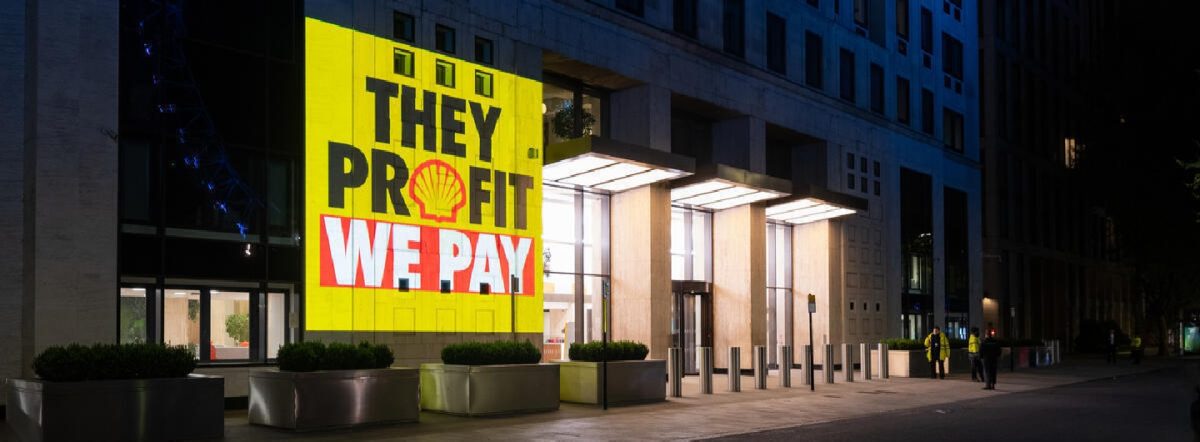
The bosses of some of Britain’s biggest energy companies have seen their personal fortunes surge by millions of pounds as a result of the conflict in the Middle East.
Analysis of shareholdings declared in annual reports and share price movements between 26 February and 27 March 2026 shows how energy chiefs may have benefited from the crisis, even as millions of households brace for a sharp rise in bills.
Among them, Harbour Energy’s Linda Z Cook saw the value of her shareholding rise by more than £4 million to £26 million.
Harbour accounts for around 15 per cent of the UK’s domestic oil and gas output and has been led by American Cook since 2021. Prior to leading the firm, which she owns almost 9 million shares in, Cook spent much of her earlier career at Shell.
Meanwhile Shell’s Wael Sawan added nearly £1.8 million to take his stake to £13.2 million. Sawan joined Shell as an engineer in 1997 and spent the early part of his career in Oman before rising through the ranks to lead Shell’s operations in Qatar, including overseeing its liquefied natural gas division.
At Centrica, Chris O’Shea saw the value of his shares rise by over £300,000, even as the British Gas owner’s boss told the BBC this month that higher household bills were “inescapable” and had previously said that it was “impossible to justify” his salary and rewards package.
At BP, incoming chief executive Meg O’Neill only took the reins on 1 April, but interim boss Carol Howle saw her shares grow by over £500,000 during the period. Departed chief executive Murray Auchincloss, who held more than 1.8 million shares at the time of his departure, could have seen his stake rise to £10.6 million at current prices.
The picture is even more dramatic among the global giants whose share prices have been supercharged by the Middle East conflict.
Chevron chief executive Michael Wirth saw the value of his near two-million-share stake rise by more than £44 million in a single month, taking his total holding to more than £312 million.
ExxonMobil’s Darren Woods added over £5 million to sit at more than £40 million, and TotalEnergies chief Patrick Pouyanné’s stake now stands at £39 million. Equinor, the Norwegian state-backed firm that supplies much of the gas the UK depends on, saw its shares rise more than 45 per cent, adding nearly £700,000 to the personal stake of chief executive Anders Opedal.
Simon Francis, coordinator of the End Fuel Poverty Coalition, said
“There are very few winners from the conflict in the Middle East, and most of those are the wealthy oil and gas bosses who help set the prices we all pay for our energy.
“But while these fossil fuel chiefs argue for more drilling in the North Sea and count the profits they will make from any new exploration, millions of UK households are facing the prospect of spending more than a tenth of their income just to keep the lights on and the heating running.
“Politicians must show whose side they are on: the households struggling with energy bills, or the millionaires calling for an early end to the Windfall Tax on North Sea profits.”
The figures come as wholesale gas prices remain at levels not seen since 2023. Average household energy bills are forecast to rise to £1,929 from 1 July 2026, a 18 per cent increase on the current cap.
Separate End Fuel Poverty Coalition data shows that energy firms have already made more than £125 billion in profits on their UK operations since 2020. At current energy prices, the Government stands to collect substantial additional tax revenue via the Energy Profits Levy.
The Coalition has called on the Government to direct that revenue towards households trapped in energy debt and those who will suffer most from a sharp rise in bills as a result of the conflict.
Caitlin Boswell, interim Deputy Director at Tax Justice UK said
“Different parts of the economy are set to make eye-watering paydays as they spot opportunities for profiteering from the US-Israeli war on Iran and immense human suffering, while ordinary people see their energy bills sky-rocket.
“That’s why the Chancellor should urgently implement excess profits taxes on energy, defence and banking sectors – called for by wider civil society – to send a clear message that the UK won’t accept profiteering from war and crisis.
“This needs to be coupled with tax system reform that ensures the massive asset price rises, like stocks in energy companies, are taxed fairly. Failing to do so will see stock price explosions channel enormous sums of money to the pockets of the super-rich, while millions in the UK are made more vulnerable to the cost of living crisis.”
Deputy director of Uplift, Robert Palmer, added:
“It’s appalling that while millions are worrying over their energy bills, we are seeing energy barons rake in millions of profits. One North Sea CEO has seen their wealth increase £4 million since the start of the Iran conflict – that’s an extra million a week.
“What’s more these companies are using this crisis to call for even more drilling in the North Sea. This would not take a penny off bills, but would lock us into an unaffordable energy supply for longer and just increase oil company profits even more.
“The oil and gas industry has been clear that the only way they would consider investing in the North Sea now, an ultra-mature and high cost basin, is if the government removes the windfall tax, which is shameful. We need political leaders who put bill-payers before billionaires and not give in to their demands.”
The data also shows that 12 of the world’s biggest energy companies added more than £233 billion in combined market value in a single month. Market capitalisation is one of the most widely used measures of a company’s overall financial health and the confidence investors place in its future earnings.
When market capitalisation rises sharply, it signals that financial markets expect the company to generate significantly higher profits in the coming months and years. Over the same period (26 February to 27 March 2026), the general FTSE 100 Index of leading UK share prices has fallen by nearly 9%.
Jonathan Bean, Fuel Poverty Action spokesperson, said:
“The Government must act urgently to stop more obscene energy profiteering from war, which will leave millions unable to afford the essential energy they need. Windfall tax loopholes must be removed and fair wealth taxes introduced.”
ENDS
All shareholding valuations are derived from closing share prices on 26 February and 27 March 2026. All non-UK currencies have been converted using the mid-market rate as per the relevant date. Being featured on this list or in this news story does not imply any wrongdoing on the part of companies or individuals and all share allocations have been made in line with standard remuneration packages.
Full data is available here (pdf).
Sources for shareholdings
Linda Z Cook / Harbour Energy
Harbour Energy Annual Report and Accounts 2025, Directors’ Remuneration Report
https://www.harbourenergy.com/media/a11hxbdn/harbour-energy-annual-report-accounts-2025_web.pdf
Wael Sawan / Shell
Shell Annual Report and Accounts 2025, Directors’ Remuneration Report
https://www.shell.com/investors/results-and-reporting/annual-report.html
Chris O’Shea / Centrica
Centrica Annual Report and Accounts 2025, Directors’ Remuneration Report
https://www.centrica.com/media/ckfb0qxj/annual-report-and-accounts-2025-untagged.pdf Page 101
Carol Howle and Murray Auchincloss / BP
BP Annual Report and Form 20-F 2025, Directors’ Remuneration Report. Shareholding figures based on position as of 13 February 2026.
https://www.bp.com/content/dam/bp/business-sites/en/global/corporate/pdfs/investors/bp-annual-report-and-form-20f-2025.pdf
Darren Woods / ExxonMobil
ExxonMobil SEC Filing, April 2025
https://investor.exxonmobil.com/sec-filings/all-sec-filings/content/0001193125-25-073986/0001193125-25-073986.pdf
Patrick Pouyanné / TotalEnergies
TotalEnergies Universal Registration Document 2025. Shareholding figure as of 18 March 2026.
https://totalenergies.com/system/files/documents/totalenergies_universal-registration-document-2025_2026_en.pdf
Michael Wirth / Chevron
Chevron Proxy Statement 2025
https://www.chevron.com/-/media/shared-media/documents/chevron-proxy-statement-2025.pdf – Page 110
Anders Opedal / Equinor
Equinor Remuneration Report 2025, shareholding as of 31 December 2025
https://cdn.equinor.com/files/h61q9gi9/global/a2b3945f550c9cd7f2e3e6085fc84d84e97fdb0b.pdf?2025-remuneration-report-equinor.pdf
The data was compiled by freelance business journalist David Craik. David’s experience has included writing business and city news and features for national newspapers and magazines such as The Daily Mirror, Sunday Times, Wall Street Journal, Scotsman and Daily Express. The data was peer reviewed by a former Bloomberg economist with expertise in the energy sector.