
Scottish public back the energy Windfall Tax in new poll

Twice as many people in Scotland (41%) support the Windfall Tax than oppose it (19%), with support cutting across all political parties and across all parts of the country, according to new polling. [1]

The Windfall Tax (Energy Profits Levy) was levied on oil and gas companies operating in the UK in May 2022 in response to record oil and gas industry profits and the rapid increase in energy costs following the Russian invasion of Ukraine. 

In recent days, wholesale energy costs have surged 30% year on year as a result of conflict in the Middle East and sit at levels last seen in winter 2022/23. [2]

Energy firms have seen their share prices rise over 7% in the last month (compared to the FTSE 100 rise of 0.43%). This includes North Sea operators who have lobbied heavily to scrap the windfall tax. [3]

A spokesperson for the End Fuel Poverty Coalition said: 

“Despite the intense lobbying by the oil and gas industry – and their political allies – the Windfall Tax retains the support of the public.

“It’s no surprise that twice as many Scots are in favour of the tax than oppose it and nearly a fifth say that they strongly support the measure.

“As long as people see the disparity between their own living conditions and the huge profits made by energy firms, this support will continue.”

The survey, carried out by Survation, spoke to over two thousand adults in Scotland in a poll that reflects the political make-up of the nation’s voters.

It revealed that Scottish voters from all parties supported the windfall tax.

Support for the windfall tax is highest among people intending to use their Holyrood list vote for the SNP (48%), Labour (53%), Liberal Democrat (61%) and Green (47%). Conservative and Reform UK voters were more likely to support the tax than oppose it (Conservatives 37% support, 34% oppose; Reform UK 32% support, 30% oppose). Similar results were found among constituency voting intention.

Frazer Scott, Chief Executive of Energy Action Scotland, commented:

“Energy companies continue to make excessive profits at the expense of people. People who cannot heat their homes to a safe level and are burdened by £5.5bn of unrepayable domestic energy debt. Until there is reform that puts people at the heart of the energy system it is right for big business to put its fair share back to help those that need it most.”

Jamie Livingstone, Head of Oxfam Scotland, said: 

“People aren’t daft; they know that the companies that have polluted our politics and plundered our planet shouldn’t be let off the hook for the spiralling climate destruction they continue to cause. 

“Energy giants have racked up years of eye-watering profits. Politicians must ensure they pick up more, not less of the tab for the shift to a clean energy future instead of leaving hard pressed Scots and communities globally facing famine and floods to foot the bill. Fossil fuel companies helped light the fire, continue to fuel it, so it’s only fair they help pay to put it out.” 

Friends of the Earth Scotland oil and gas campaigns manager Rosie Hampton commented:

“With the conflict in the Middle East, energy companies could again be making the windfall profits that have caused the cost-of-living pain and suffering in the last five years. People will be rightly worried about household energy bills soaring again as greedy oil giants capitalise on the violence. 

“We must not forget that this tax will go to supporting the NHS, educating children and protecting our environment so any politician calling for the tax to end are demanding less support for vital public services.”

Previous End Fuel Poverty Coalition research found that just a handful of energy firms have made around £40 billion in UK profits in the last two years, even with the Energy Profits Levy in place.

The Government has committed to phasing out the tax by 2030 to be replaced by a new tax regime for the sector.

ENDS

[1] Survation asked over 2,000 Scots:

An Energy Profits Levy (EPL) or ‘Windfall Tax’ was levied on oil and gas companies operating in the UK in May 2022 in response to record oil and gas industry profits and the rapid increase in energy costs following the Russian invasion of Ukraine. It is due to be in place until 2030. Do you support or oppose, or neither support nor oppose, the current windfall tax on oil and gas company profits?

  • Fieldwork Dates Fieldwork: 10th February – 17th February 2026
  • Full details are available from the Survation website.
  • FULL RESULTS
    • Strongly support the Windfall Tax 19%
    • Tend to support 22%
    • Neither support nor oppose 27%
    • Tend to oppose 11%
    • Strongly oppose 8%
    • Don’t know 13%
    • NET: Support (Strongly+Tend to) 41%
    • NET: Oppose (Strongly+Tend to) 19%
    • Weighted total: 2005 respondents 
  • Method – The survey was conducted via Online Panel. Different response rates from different demographic groups were taken into account.
  • Population Sampled: Adults aged 16+ in Scotland. Sample Size 2,005. 
  • Data Weighting: Data are weighted to the profile of Scotland. Data was weighted by respondent’s sex, age, region, and past vote (2014 referendum, 2016 referendum, 2021 Scottish parliamentary election, 2024 general election). Targets for the weighted data are derived from the ONS.
  • Margin of Error Because only a sample of the full population was interviewed, all results are subject to margin of error, meaning that not all differences are statistically significant. For example, in a question where 50% of respondents (the worst case scenario as far as margin of error is concerned) gave a particular answer, with a sample of 2005 it is 95% certain that the ‘true’ value will fall within the range of 2.33% from the sample result. Subsamples from cross-breaks will be subject to higher margin of error. Conclusions drawn from crossbreaks with very small sub-samples should be treated with caution.
  • Polling available to download as an .xls here.

[2] Trading Economics Data as at 6 March 0900. https://tradingeconomics.com/commodity/uk-natural-gas 

[3] Profits data from https://www.endfuelpoverty.org.uk/news/energy-firm-profits-tracker/.

Share price data from Bloomberg 6 March 0900, data as at close of business on 4 March. 10 energy firms listed on London Stock Exchange are monitored through a watchlist and prices compared to 8 February. These firms represent a mix of producers, suppliers, traders and supply chain in both fossil fuel and renewable sectors. Within this, specific surge examples include Ithaca Energy (+15%), Harbour Energy (+13%) and BP (+4%) all rising strongly in the immediate aftermath of the American / Israeli attacks on Iran. Harbour rose from 242.4 on 25 Feb to 274.8 on 3 March. Ithaca 213.5 to 245.5. BP 470.25 to 488.20.

Energy debt rises to £5.5bn with further increases expected

A new report by Energy UK has revealed the scale of household energy debt, which has more than doubled over the last three years to reach £5.5 billion.

Arrears now represent around 75% of all unpaid energy bills, meaning there are no repayment plans in place for the majority of this debt, while over one million households currently have no registered details with suppliers, increasing the risk of unmanaged debt.

A spokesperson for the End Fuel Poverty Coalition, said:

Energy debt has risen for one simple reason: energy bills have remained far higher than household incomes can sustain. This is not a story of widespread ‘won’t pay’ behaviour, it is overwhelmingly about people who simply cannot afford the bills landing on their doormats.

“The real level of financial stress in households in energy debt is likely to be even higher when you factor in people juggling credit cards, borrowing from family, or self-disconnecting on prepayment meters to avoid falling into formal arrears.

“We know from our research in 2024 that households in energy debt also turn to loan sharks due to the cost of energy.

“The human impact is severe. If debts continue on their current trajectory towards £7bn by 2027, we risk locking millions of families into a permanent cycle of fuel poverty.

“It is also increasingly hard to justify a system where the costs of unrecoverable debt are routinely added onto the bills of those who do pay. As Ofgem persists with a methodology that has failed, the energy industry keeps on reporting billions of pounds in profits.

“The priority should be preventing debt building up in the first place. That means urgent progress on debt relief, fairer standing charges, a social tariff for those on the lowest incomes, and a major programme of home energy upgrades to bring bills down for good.”

Energy bills set to fall 7% from 1 April under Ofgem price cap

Ofgem has announced that the average household energy bill will fall by 7% from 1 April 2026.
The impact of the year-on-year changes could see the number of households paying more than 10% of their income on energy fall from 13.2m to 11.2m.
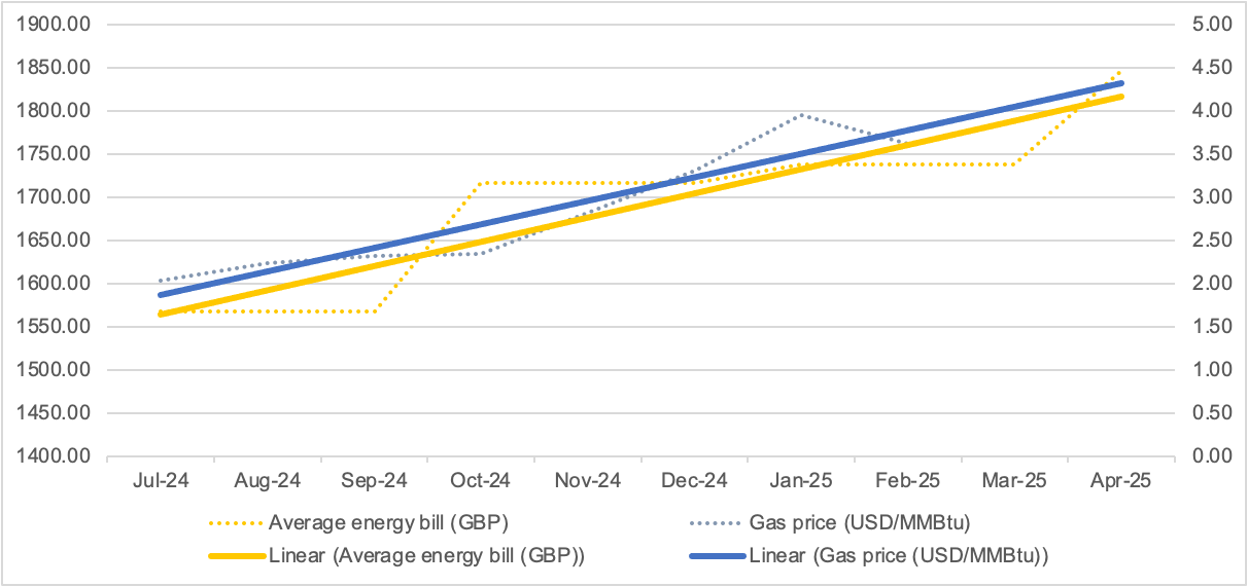
However, the changes will see energy bills remain £599 (57%) above winter 2020/21 and £73 (5%) above what they were on 1 July 2024.
Significant changes to unit costs and standing charges will take effect from 1 April 2026 and initial analysis suggests some households will see much bigger reductions than others.
A low usage household will see their bill reduce by around £80, while high usage households might see a £140 saving.
Using data from Scope and Mencap, the End Fuel Poverty Coalition has calculated that those reliant on energy for disability or health needs could see even greater savings, but will still experience a 64% ‘energy poverty premium’ with a typical bill much higher for these groups.
It remains unclear when and how energy firms will start to reflect these changes in the rates they advertise. The Government is expected to make a further announcement next month.
Simon Francis, coordinator of the End Fuel Poverty Coalition, said:
“Government decisions are starting to make a difference and today’s fall in the price cap will bring some welcome relief to households who have been under intense pressure from high energy costs.
“But, of course, bills remain hundreds of pounds above pre-crisis levels and for millions of families in cold, damp homes this will not feel like the cost of living crisis is over. If the country is going to tackle energy affordability for good, this must be the start of deeper reform, not the end of the job.
“That means bearing down on excessive market trading costs, dealing with the growing mountain of energy debt, taking a hard look at how infrastructure costs are recovered from households and doing more work to reduce exposure to volatile gas prices.
“At the same time, the energy industry and its ultimate owners, including hedge funds and overseas investors, must continue to face scrutiny for the healthy profits made at the expense of households
“With the changes to both unit rates and standing charges still working through the system, consumers may need to be cautious about rushing into fixed deals right now. Bill payers may want to wait for the dust to settle and carefully check their specific usage to ensure any switch delivers the maximum savings.”
Hannah Wall, Community Heat & Energy Lead at climate charity Possible, said:
“Lowering the energy price cap by removing levies from customers’ bills is a welcome step forwards to support people who have been struggling with high bills. But far too many people are still living in energy poverty, and face impossible choices to keep their homes warm.
“Energy bills remain significantly higher than they were before the energy crisis, driven by soaring gas costs. The structure of our energy system still leaves us exposed to volatile fossil fuel prices. It’s unfair that our electricity bills continue to be tied to global gas markets, creating a distortion that makes it harder for people to switch to clean electric heating, which should be cheaper than dirty gas.
“We need faster action from the government to deliver promised reforms to the electricity market to ensure everyone can afford a warm home powered by clean, climate-friendly heat and energy.”
Independent Age chief executive Joanna Elson, CBE, said:
“Today’s energy price cap announcement will provide some brief respite for the older people in financial hardship, as a typical household energy bill is dropping by almost seven per cent to £1,641 from April.
“However, energy bills are still extremely high, and the older people on low incomes we support are seeing their budgets stretched beyond breaking point.
“This winter has been brutal, we have heard dreadful accounts of people in later life sitting in cold, dark homes, or cutting back on other essentials such as food so they can turn a radiator on.
“This poses a health risk to older adults and cannot be allowed to continue happening.
“There are immediate and long-term actions the UK Government can take to support people on low incomes who cannot afford to heat their homes.
“The recent Warm Home Discount extension was welcome, but at £150, it does not go far enough in supporting those in financial hardship.
“We want to see it increased to £400 to match the high cost of energy bills.
“Targeted bill support is also needed in the form of an energy social tariff that protects customers on low incomes from future spikes in costs.
“If the UK Government is serious about tackling the cost of living and raising living standards, it should take meaningful action to lift people out of fuel poverty.”
Jonathan Bean from Fuel Poverty Action, commented:
“Customers should not be fooled: energy bills are still £600 higher than 5 years ago, meaning the suffering will continue for millions of us.
“Up to £500 of our bills is energy firm profits which means that Ofgem and the Government are failing to protect us.
“We especially need a fairer deal on electricity pricing which is four times higher than gas, despite wind and solar energy being cheaper.”
James Taylor, director of strategy at Scope, added:
“Life costs a lot more if you’re disabled. The need to run lifesaving equipment or keep the heating on year-round means bills continue to be steep.
“We’re calling on Ofgem to do much more to protect disabled customers, and for the government to introduce a discounted energy deal for disabled people.”
Uplift Deputy Director Robert Palmer said:

“This is welcome news for millions of households as it shows the UK is starting to turn a corner on energy bills.

“Weaning ourselves off volatile gas is the only real long term route to affordable energy bills and last year we generated record-breaking amounts of renewable energy, with wind power cutting the wholesale cost of electricity by almost a third.
“Compare this to America where Donald Trump is blocking renewable energy and doubling down on fossil fuels, and electricity bills are rising.
“Today’s Price Cap shows we’re on the right path. It’s not just our bills that are benefitting from more renewables, our planet will too. This is a change that cannot come soon enough as already we’re seeing the impacts of climate change caused by our oil and gas dependency and the costs it imposes on everyone, whether that’s flooded homes and businesses or rising food prices.”

Three years on – the forced prepayment meters scandal remains unresolved

More than three years after the forced prepayment meter scandal first broke, households are still facing forced entry into their homes under a court system now itself under formal investigation.

The 1st February 2026 marked the third anniversary of the Times‘ undercover investigation into British Gas. The Ofgem investigation into the firm is still ongoing with the regulator unable to confirm when it will be completed.

Campaigners continue to call for a full ban on forced PPMs until the justice process is proven to be transparent, lawful and safe.

What are “forced prepayment meters” (PPMs)?

Forced prepayment meters are installed when an energy supplier uses a court warrant or remote smart-meter switching to move a household onto pay-as-you-go energy without their consent, usually because of debt. When credit runs out, energy supply stops, leading to “self-disconnection”.

Key ongoing concerns

  • Lack of transparency: warrants approved in private, limited records, no public scrutiny.
  • Bulk processing: large batches approved together, sometimes after only a small “sample” was reviewed.
  • Procedural failings: reports of errors being found in some applications but the rest being approved regardless.
  • Risk to vulnerable households: including disabled people, those on the Priority Services Register and people living in cold, damp homes.
  • Regulatory delay: Ofgem’s British Gas investigation remains unresolved almost three years on.
  • Ongoing harm: energy debt remains at record levels, with PPM households at highest risk of self-disconnection.

Timeline

Before 2022

Forced PPM installations and warrant use were routine but largely hidden from public view.

2022

Media investigations reveal the scale of forced PPM installations and mass court warrants (4th December, the i). Evidence emerges of magistrates’ courts approving bulk applications with minimal scrutiny. Public and political concern grows over forced entry into homes of vulnerable customers.

Early 2023

The scandal escalates after reporting (1st February, the Times) exposes the practices of major suppliers, including British Gas.

Energy firms agree to a voluntary pause on forced PPM installations which campaigners say doesn’t go far enough.

Ofgem launches compliance reviews and enforcement investigations.

Mid–late 2023

As the public calls for a ban on forced PPMs and fresh concerns about energy firm behaviour toward vulnerable households are raised in the media, new “safeguards” and court processes are developed.

Ministers are accused of a dereliction of duty as a public consultation on the issue by Ofgem is overwhelmed with responses.

While formalised Ofgem rules replaced the voluntary commitment from 8 November, campaigners warn that a “cloak of secrecy” remains around warrant hearings and that the system risks repeating past failures.

2024

Some suppliers are allowed to resume forced installations under revised rules.

Ofgem announces redress and compensation schemes, but major enforcement cases continue.

2025

Energy debt reaches new highs.

Ofgem’s investigation into British Gas remains unresolved, now approaching three years.

Fresh reporting by journalists reveal that large batches of warrants are being approved. In some cases hundreds of warrants were authorised after only a small “sample” was reviewed and even when errors were identified in some applications, the rest were approved in bulk.

Following these revelations, the Chief Magistrate launches a formal review of the warrant process in England and new calls for a legislative ban on the process are made to Ministers.

Anne McLaughlin, the former SNP MP for Glasgow North East, led much of the Parliamentary pressure on the issue. She called the ongoing scandal “utterly ridiculous” and said:

“The fact that forced installations are still happening while both the courts process and Ofgem’s original investigation remain unresolved shows how little confidence there can be in the current system.

“The regulator has been painfully slow in investigating one of the worst culprits and as time drags on, memories fade and the people affected by the scandal are still to see justice done.”

Simon Francis, coordinator of the End Fuel Poverty Coalition, commented:

“It is beyond belief that more than three years after the forced prepayment meter scandal first broke, families are still facing forced entry into their homes under a court process that is now itself under formal investigation.

“No one should be pushed onto a prepayment meter, or threatened with a warrant, simply because they are struggling to pay their energy bills. 

“Until the Chief Magistrate’s review is complete and the system is proven to be transparent, lawful and safe, all forced prepayment meter installations must stop.”

Frazer Scott, CEO, Energy Action Scotland, said:

“It is unbelievable and inconsistent with high standards of consumer protection that it has now taken 3 years to investigate the behaviour of British Gas.

“In cases of suspected wrongdoing it should act swiftly to ensure that people are not put at risk. Many vulnerable people remain at risk of a forced installation until all outstanding investigations are concluded.

“9 energy suppliers have resumed forced prepayment meter installations. Others may yet restart. It is a worrying time for those in debt to their energy supplier, debt that stands at over £4.5bn.

“Consumer protection should be at the beating heart of the energy regulator, it needs to do more.”

Jonathan Bean, Spokesperson from Fuel Poverty Action, added:

“Forced prepayment meters are inhumane and dangerous. Disconnecting people from essential heating and power when they are short of cash is the exact opposite of energy security. Ofgem continues to fail in its statutory duty to protect us.”

ENDS 

More background information available here:  https://www.endfuelpoverty.org.uk/about-fuel-poverty/forced-pre-payment-meter-transfer/

https://www.endfuelpoverty.org.uk/tag/ban-forced-ppms/ 

https://www.ofgem.gov.uk/information-consumers/energy-advice-households/check-energy-suppliers-can-install-prepayment-meters-without-household-permission

Fuel poverty fight enters a new phase as hard work on Warm Homes Plan begins

The Government’s new £15bn Warm Homes Plan has been welcomed as a potential breakthrough in tackling cold, damp housing, cutting energy bills and slashing carbon emissions.

But campaigners have warned that the Plan [pdf] must avoid the failures of previous schemes, remain focused on helping those most in need, and be backed by strong consumer protections and reform of the wider energy system.

The Plan is built around three main pillars:

  1. Targeted support for low-income households: with £5bn in grants to fund insulation, heat pumps, solar panels and batteries.
  2. Universal loan offers: low- and zero-interest finance for any homeowner to access rooftop solar, heat pumps or battery storage.
  3. New protections for renters: including upgraded energy efficiency standards for the private rented sector.

The Plan is necessary to help address the long-term health impacts of living in cold damp homes and the 12.1m households who struggle with energy bills.

Andrew McCracken, Director of External Affairs at Asthma + Lung UK, explains: “Living in a cold, damp or mouldy home puts people at increased risk of developing serious lung conditions and can cause life-threatening asthma attacks and exacerbations of chronic obstructive pulmonary disease (COPD).

“Poor housing is a key determinant of lung health, so with survey data showing that more than one in five people with lung conditions are living in cold or damp housing, it’s little wonder the UK has the highest rate of deaths from lung disease in Europe.”

Simon Francis, Coordinator of the End Fuel Poverty Coalition, added: “The lifeblood of the Plan amounts to a rescue mission for the coldest, dampest homes in Britain – and this must be the priority. Combined with long-overdue improvements to conditions in the private rented sector, it could save lives, cut NHS costs and permanently slash energy bills for those in fuel poverty.”

So while campaigners have praised the cross-government approach to tackling fuel poverty and the Warm Homes Plan’s ambition, many have warned it must be properly implemented and locally led.

Graham Duxbury, Groundwork UK’s Chief Executive, said: “There’s much to commend in the Warm Homes Plan.  We particularly welcome the worst-first approach, the area-based model and the emphasis on local job creation. This is the right long-term strategy but we know it won’t solve the problems of acute fuel poverty and energy debt overnight.  We also know that, without additional support, those living in more vulnerable or challenging circumstances may not benefit.”

Kate Meakin, director of Energise Sussex Coast, warned: “Insulating homes is a permanent solution to end fuel poverty… However, if this Plan is to avoid past failures, there must be a mandatory requirement for real-world performance to be monitored after installations are complete – as well as a Warm Homes Guarantee that ensures that every household that receives support actually sees their bills come down.”

The Warm Homes Guarantee, proposed by the End Fuel Poverty Coalition, is built around quality advice on the right installations to deliver, enhanced consumer protections and a promise that every upgraded home will see bills come down. As Graham Duxbury explains, we “would like to see up-front community engagement to ensure widespread take-up and post-installation support to ensure householders gain the full benefit of any measures installed.”

Jonathan Bean from Fuel Poverty Action also highlighted the “catastrophic failures” in the defective ECO4 and GBIS schemes, urging the Government to support households affected while also boosting skills training.

Joanna Elson, Chief Executive of Independent Age also warned that while the development of the Warm Homes Agency has the potential to significantly improve access information and advice about upgrading homes to bring down energy bills, this should not be overly reliant on digital tools: “It is essential that there are national and local services that are accessible to them, including for the digitally excluded.”

Others welcomed minimum energy efficiency standards for private rentals, but raised red flags over key exemptions. Niamh Evans of the Renters Reform Coalition said:

“The Government’s choice to lower the cap on landlord spending from £15k to £10k means many tenants stuck in some of the worst insulated homes will be left in the cold and their landlords won’t be required to bring up to EPC C. We’re also concerned that the government has still not set out plans to protect renters from rent increases or evictions following upgrades linked to the scheme.”

Members of the Coalition suggest that spend caps for landlords make little sense and should at least take account of inflationary pressure and cost disparity in different locations.

Joanna Elson added: “Older people with a lower income are more likely to live in rented homes of a lower value and at lower standards. These decisions may leave some of those most at risk continuing to pay more to keep their home warm or force them to go without warmth entirely. We are urging the UK Government to ensure that homes that need the most improvement benefit fully from the Minimum Energy Efficiency Standard.”

Meanwhile, experts also highlighted the need for wider reforms to work alongside the Plan and the newly published fuel poverty strategy.

Tessa Khan, executive director of Uplift, said: “A Warm Homes Plan is desperately needed, with world events once again highlighting the UK’s vulnerability from our over-reliance on gas for heating. We can no longer bank on the North Sea because, after 50 years of drilling, the UK has now burned most of its gas.

“Ending this dependency, by ensuring our homes are more energy efficient – particularly for those on lowest incomes – and powered by renewable energy, is both pragmatic and the right thing to do for ensuring we have affordable energy.

Chris Galpin, Senior Policy Advisor at E3G, said: “Stronger building efficiency standards will be life-changing for many renters – slashing their bills by hundreds of pounds a year, as well as keeping their homes drier and healthier. But more still needs to be done to protect households with electric heating, who are twice as likely to face fuel poverty as other households.”

Frazer Scott from Energy Action Scotland added that while the Plan needs to be clearer about what funding is UK and what is devolved, the announcement was also “another lost opportunity to at least signal consideration of a social tariff for energy users.”

Therefore, while the Plan and the fuel poverty strategy bring together many long-standing policy asks, the End Fuel Poverty Coalition is now developing the next steps required to ensure it fulfils its potential, this includes:

  • Full transparency on funding: distinguishing new investment from previously announced budgets and clarity on devolved settlement.
  • Action on electricity pricing, to make electric heating cost-competitive and fair.
  • Robust standards, consumer protections and oversight through a Warm Homes Guarantee to avoid a repeat of past failings.
  • Increase the landlord spending cap to £15k, safeguards to stop landlords fiddling with Energy Performance Certificates, a prevention of rent increases or evictions due to improvements and a robust defence of the proposed policy in light of likely lobbying from landlords’ groups.
  • More interim financial support, such as Cold Weather Payments reform, Warm Home Discount extension and energy debt relief (over an above the latest proposals from Ofgem) while upgrades are rolled out and a long term social tariff is developed.

ENDS

Warm Homes Plan launched to upgrade homes and cut energy bills

The Government’s £15bn Warm Homes Plan promises to tackle fuel poverty, cut bills and reduce emissions through three main pillars:

  • Targeted support for low-income households,
  • A universal loan offer for solar panels, batteries and heat pumps, and
  • New protections for renters living in cold, damp, or mouldy homes.

Campaigners have welcomed the Plan with its potential to improve conditions in the coldest homes, through insulation, heat pumps and solar panels. Although its success in reducing fuel poverty will be judged on real delivery, strong consumer protections and a focus on the people most in need.

A spokesperson for the End Fuel Poverty Coalition commented:

“The lifeblood of the Plan amounts to a rescue mission for the coldest, dampest homes in Britain – and this must be the priority.

“Combined with long-overdue improvements to conditions in the private rented sector, it could save lives, cut NHS costs and permanently slash energy bills for those in fuel poverty.

“Achieving this, while also inspiring a rooftop and heat pump revolution through loans and subsidies, will require a national effort. There will also need to be reforms which go beyond this Plan, such as bringing down the cost of electricity and providing financial support with energy costs while households wait for improvements to be installed.

“Above all, any use of public funds must come with a Warm Homes Guarantee, built around quality advice on the right installations to deliver, enhanced consumer protections and a promise that every upgraded home will see bills come down.

”If delivery matches ambition then this could be the biggest breakthrough in tackling cold damp homes in a generation, but now the hard work begins.”

Adam Scorer, Chief Executive at National Energy Action, added:

“People struggling in fuel poverty desperately need the Warm Homes Plan. Cheaper energy costs, efficient heating systems and homes that keep the warmth in, are all essential for the plan to succeed. There is a lot of work to be done, but today’s publication and commitment to lift a million households out of fuel poverty is a welcome, landmark occasion.”

Tessa Khan, executive director of Uplift, said

“A Warm Homes Plan is desperately needed, with world events once again highlighting the UK’s vulnerability from our over-reliance on gas for heating.

“Ending this dependency, by ensuring our homes are more energy efficient – particularly for those on lowest incomes – and powered by renewable energy, is both pragmatic and the right thing to do for ensuring we have affordable energy.

“We can no longer bank on the North Sea because, after 50 years of drilling, the UK has now burned most of its gas. Regardless of any new drilling, the UK will be dependent on gas imports for nearly two thirds of its gas in just five years time and almost 100 per cent by 2050, unless we shift away from gas.

“An ambitious warm homes plan, properly implemented, will reduce our exposure to price shocks and mean we are not at the mercy of bad actors like Putin or the whims of Trump.”

Nick Davies, Head of Climate Policy at Green Alliance, said:

“Everyone has a chance to lower their energy bills with clean technologies under the government’s new Warm Homes Plan. That’s critical because rollercoaster global gas prices have fuelled a cost of living crisis which means energy bills remain far too high.

“Supporting more households to afford the upfront costs of installing solar panels or switching to ultra-efficient electric heat pumps will help to cut bills, reduce our reliance on imported gas and keep the climate safe for our children.”

Ministers urged to halt forced prepayment meters amid secret court hearings concerns

Campaigners have written to the Government and Ofgem demanding an immediate new pause on forced prepayment meter installations, after fresh revelations that magistrates’ courts are continuing to approve bulk warrants through secret hearings.

In a letter sent to the Minister for Energy Consumers, the Minister for Courts and Ofgem’s Chief Executive, the End Fuel Poverty Coalition warns that households are still being subjected to forced entry and involuntary meter installations despite the scandal that first emerged more than three years ago.

The intervention follows recent reporting by journalist Tristan Kirk revealing that magistrates are routinely sitting in private and approving large batches of energy company warrant applications without examining individual cases. In some instances, courts reportedly approved hundreds of warrants after reviewing only a small “sample”, even when errors had already been identified.

The letter notes that these concerns have now prompted the Chief Magistrate to launch a formal review of the warrant system. However, the End Fuel Poverty Coalition has suggested that allowing forced installations to continue while the court process itself is under investigation leaves households at ongoing risk.

“These secret court hearings effectively punish households simply because they are struggling to pay their energy bills,” the letter states. “Many of those affected are already living in cold, damp homes and facing record levels of energy debt. Continuing forced action under a system now acknowledged to be under review is indefensible.”

The Coalition is calling for an immediate and comprehensive pause on all forced prepayment meter installations and warrant-based forced entry until:

– The Chief Magistrate’s investigation is completed and published in full

– Transparency is restored to the court process

– Ofgem concludes its long-running investigation into British Gas and affected customers are fully compensated

– Clear, enforceable protections are in place to prevent further harm.

A spokesperson for the End Fuel Poverty Coalition, said:

“It is extraordinary that more than three years after this scandal first broke, families are still being dragged through secret court processes that even now appear to lack basic safeguards.

“We now have confirmation that the Chief Magistrate is reviewing how these warrants are being issued. The only responsible response is to pause forced prepayment meters immediately, until that investigation is complete and the system is shown to be lawful, transparent and safe.

“No household should face forced entry into their home because they are in energy debt, especially when the process authorising that entry is itself under serious question.”

The Coalition also raised renewed concerns about the continuing delay in Ofgem publishing the outcome of its enforcement investigation into British Gas, which was launched following the original forced PPM scandal and has now been running for almost three years.

ENDS

The letter can be read online as a pdf.

More on the history and background of the Forced PPMs scandal: https://www.endfuelpoverty.org.uk/about-fuel-poverty/forced-pre-payment-meter-transfer/

Price cap tweaks fail households as cold snap hits the country

A marginal change to the energy price cap will put more pressure on struggling households this winter, campaigners have warned, with average bills still set to remain almost £700 higher than before the energy crisis.

Even when the changes to bills announced in the recent Budget come into effect in the spring of 2026, average energy bills will remain higher than they were in winter 2020/2021 and above the level of the price cap at the last General Election.

Meanwhile, evidence shows unsafe housing conditions are becoming entrenched. Almost a third (29%) of adults say they are unable to keep their home at the recommended minimum temperature of 18°C. [1]

For 14% of UK adults, the situation is so severe that they consider themselves to live in cold, damp homes, with much higher rates among low-income households, families with children and people with long-term health conditions.

Campaigners warn that these conditions are not just uncomfortable, but dangerous.

Among those living in cold, damp homes, almost one in five (18%) say they have experienced high levels of carbon monoxide in their home in the past 12 months. [2]

Yet even as households face growing risks, regulatory decisions continue to protect industry returns.

In the detailed price cap documents, Ofgem confirmed that the Earnings Before Interest and Tax (EBIT) allowance built into the cap will rise by £1.51 per household from January to March 2026. This represents a 4% increase, potentially handing suppliers millions of pounds of extra profit while the average household energy bill will rise by 0.2 percent. [3]

More broadly, analysis shows that just 27 energy companies from across the industry have made more than £125bn in UK profits since 2020, forming part of more than half a trillion pounds in global profits across the sector during the energy crisis. More than four-fifths of those profits come from companies with extensive involvement in the gas industry.

But reliance on gas is not only driving bills and profits – it is also a shrinking and risky foundation for the UK’s energy system.

Official data shows the UK will no longer be able to meet national heating demand using domestically extracted gas from 2027, underlining the growing disconnect between record profits and a North Sea basin in long-term decline.

A spokesperson for the End Fuel Poverty Coalition, said:

“It really is a case of every little doesn’t help as cold weather grips the country and the price cap nudges upward.

“Households are facing their fifth winter of unaffordable energy bills. For millions of people, this cold isn’t an inconvenience, it’s a real risk to health and safety as they struggle to keep homes warm.

“More households are being pushed into cold, damp homes where cutting back on heating, delaying repairs and blocking ventilation increases the danger of carbon monoxide exposure.

“At the same time, the energy industry has made more than £125bn in UK profits since 2020, including firms operating in a declining North Sea. Ministers must act now by funding the Warm Homes Plan, fixing energy pricing and introducing a fair social tariff so people can stay safe every winter.”

ENDS 

[1] Opinium conducted an online survey of 2,000 UK adults between 25th and 27th November 2025. Results have been weighted to be nationally representative.
18 degrees centigrade is the level advised by World Health Organisation experts to reduce the risk of illness. Telfar Barnard L, Howden-Chapman P, Clarke M, Ludolph R. Web Annex B. Report of the systematic review on the effect of indoor cold on health. In: WHO Housing and health guidelines. Geneva: World Health Organization; 2018 (WHO/CED/PHE/18.03). Licence: CC BY-NCSA 3.0 IGO.

[2] Carbon monoxide, which is colourless, odourless and potentially fatal, is produced by faulty or poorly ventilated gas appliances, with risks increasing when heating systems are under-used or poorly maintained due to cost pressures. 

[3] See Ofgem summary of price cap changes pdf, p7.

Carbon monoxide problems more common in fuel poor homes

Households living in cold and damp homes are far more likely to report experiencing dangerous levels of carbon monoxide, according to new research, raising fresh warnings about the hidden safety risks facing people in fuel poverty.

Figures from the End Fuel Poverty Coalition show that 18% of people who say they live in a cold, damp home have had issues with high levels of carbon monoxide in the past 12 months, compared with just 7% of UK adults overall.

Carbon monoxide, which is colourless, odourless and potentially fatal, is produced by faulty or poorly ventilated gas appliances. Campaigners say people struggling to heat their homes are more likely to be exposed to risk, as unaffordable repair costs, ageing boilers and attempts to retain heat by blocking ventilation combine to create dangerous conditions indoors.

The research also shows that certain groups were significantly more likely to report carbon monoxide problems, particularly those facing additional housing and financial pressures. Reports were especially prevalent among 18 to 34-year-olds (16%) and households with children under 18 (11%).

Safety concerns are further compounded by a lack of basic protection, with almost one in three members of the general public (31%) saying they do not have a working carbon monoxide detector in their home.

A spokesperson for the End Fuel Poverty Coalition, said the findings showed how unsafe housing conditions and poverty are putting lives at risk:

“The fact that people living in cold and damp homes are significantly more likely to experience carbon monoxide problems exposes a deadly intersection between poverty, poor housing and our continued reliance on gas. People in fuel poverty are more likely to be trapped in older, badly maintained or poorly ventilated properties, dramatically increasing the risk of carbon monoxide exposure.

“In rented accommodation tenants may feel unable to report safety concerns for fear of eviction or rent rises. That creates a toxic situation where serious hazards go unreported, life-threatening faults remain unfixed and vulnerable households are left exposed to an invisible killer.

“Ending fuel poverty is not just about lowering bills. It means tackling unsafe housing, strengthening tenants’ rights and moving away from fossil fuel systems that put people’s health at risk every winter.”

Campaigners say the findings strengthen the case for targeted investment in warm, well-ventilated homes and affordable clean heating systems, warning that without action, fuel poverty will continue to expose millions to avoidable health dangers behind closed doors.

Jade Monroe, Senior Project Manager at Students Organising for Sustainability, commented:

“Research shows that 59% of students’ say they feel uncomfortably cold and 54% say they have damp or mould in their rented student accommodation. We know that living in these conditions already puts undue pressure on students’ health and wellbeing and so it is worrying to hear that there is the additional risk of carbon monoxide exposure. We want to see fuel poverty reduced and vulnerable tenants protected, and that means making significant investment to improve accommodation in the private rented sector.”

All households should follow basic Government advice to ensure they remain safe from carbon monoxide. If carbon monoxide build up is suspected, follow advice from Energy UK and contact the Gas Emergency Service (24 hours) on 0800 111 999.

The public should remain vigilant for signs of carbon monoxide poisoning, such as:

  • headache / dizziness
  • feeling or being sick
  • feeling weak
  • confusion
  • chest and muscle pain
  • shortness of breath

If carbon monoxide poisoning is suspected follow NHS advice and contact 111 or 999.

ENDS

Opinium conducted an online survey of 2,000 UK adults between 25th and 27th November 2024. Results have been weighted to be nationally representative. Opinium is a member of the British Polling Council and abides by its rules.

Secret court hearings continue to punish homes in energy debt

Three years on from the scandal that exposed the forced installation of prepayment meters into people’s homes, a new year-long investigation by The Standard reveals that energy companies are still relying on closed magistrates’ court hearings to secure warrants against households with unpaid bills, often without customers present or represented.

The investigation also found that one magistrate examined ten warrant applications in detail as a ‘sample’ which would then determine the fate of other applications in the batch. But while two of the sample were found to breach procedural rules and withdrawn, two new applications that passed scrutiny were added and the remaining warrants were approved in bulk without further checks.

This implies that no effort was made to establish whether similar failings affected the rest of the applications.

In November 2023, when the new court process was being developed, End Fuel Poverty Coalition wrote [pdf] to Ministers to raise concerns that a “cloak of secrecy” appeared to have remained in place.

Following media reports about the behaviour of one firm, the letter set out that “the same old magistrates’ practices seem to have continued.”

“Distant hearings, nodding through batch applications, not checking for vulnerability and a failure to inform customers that they are due to have their case heard. No one can be confident of getting justice under the current system.”

In response to the latest investigation by the Standard, a spokesperson for the End Fuel Poverty Coalition commented:

“This investigation exposes a deeply troubling practice where people struggling with unaffordable energy bills are condemned through the courts out of sight and without a voice.

“At a time when energy bills remain far higher than before the crisis, it is wrong that households are facing secret hearings and forced entry instead of meaningful support. This is not a failure of the individual customers, it is a failure of our energy system.

“It’s time to stop criminalising energy debt and allowing these cases to be pursued through a court system which is clearly unfit for the purpose. Instead, we need action to fix the causes: reforming energy pricing so bills are affordable, providing targeted financial support for households in cold, damp homes, and rolling out insulation and energy efficiency upgrades starting with those most at risk.

“No one should fear court action or forced entry simply because they cannot afford to heat their home.”

Subscribe to our Substack alerts now