Energy companies have generated profits of over £26.2 billion in the first three months of 2026, with around £3 billion generated on the firms’ UK operations. [1]
The UK generated returns equate to £102 in profit for every household in the UK in just three months. [2]
The figures have been compiled following trading updates by a host of household name energy firms in recent weeks as the conflict with Iran and the closure of the Strait of Hormuz delivered a significant war windfall for oil and gas firms at the same time as households face rising bills.
Among the results included in the figures are Equinor, the UK’s biggest gas supplier, which said it had generated £7.19 billion in profit in Q1 2026. Shell’s announcement of £5.07 billion in profits is also included with the firm looking to reduce its UK tax liability by around £1.3 billion through its Adura joint venture with Equinor, which pools the two firms’ North Sea exploration assets.
TotalEnergies has followed a similar path to Adura, spinning off its UK North Sea assets into NEO NEXT+, now billing itself as the largest producer on the UK Continental Shelf. The parent company posted adjusted net income of £4 billion for the quarter, up from £3.1 billion a year earlier and has announced a share buyback and increased dividends.
BP reported underlying profits of £2.4 billion for the first three months of the year, more than double the figure from a year earlier, driven largely by its oil trading division.
Other firms included in the analysis include Chevron and Scottish Power owner Iberdrola. The Spanish-based firm reported an 11% rise in adjusted net profit in Q1 2026, with growth driven substantially by its regulated network operations in the United Kingdom.
Meanwhile, new analysis from the Energy and Climate Intelligence Unit found that the average household’s energy bills will have been £4,800 (87%) higher over the five years since the start of the gas crisis in late 2021, with the coming winter likely to add even more to these extra costs.
Cornwall Insight forecasts average household energy bills will rise by £201 a year from 1 July while homes on heating oil and LPG energy have already seen energy costs soar, prompting the Government to provide limited emergency relief and extend support for these households to move off oil and gas.
In a new poll from Survation, 74% of the public felt that it is morally wrong for oil and gas companies to profit from the energy crisis caused by the Iran war [3]. The figures back up previous End Fuel Poverty Coalition polling which showed that the public support the Windfall Tax by a margin of two to one.
Energy company bosses saw their own personal wealth grow off the back of the current crisis, with Harbour Energy’s Linda Z Cook seeing the value of her shareholding rise by more than £4 million to £26 million in just the first four weeks of the latest conflict.
Harbour has claimed in a trading update that the Middle East conflict has created ‘unprecedented disruption’ to energy markets, while quietly more than doubling the amount of surplus cash (known as ‘free cash flow’) for 2026 to £1.02 billion ($1.4 billion) on the back of rising oil and gas prices.
Simon Francis, Coordinator of the End Fuel Poverty Coalition said:
“Around a quarter of every energy bill is taken in profit by a range of firms involved in the industry and that figure could well grow thanks to the war profits still being generated by the energy industry.
“Not only do these firms profit off the back of a war which has killed thousands of civilians, but the profits are also built on the backs of financial suffering in UK households.
“It can’t be right that while the public see their energy bills increase, energy firms make billions and employ rafts of accountants to maximise their profits and lobbyists to campaign against the Windfall Tax.
“The only winners from the conflict with Iran appear to be the oil and gas giants who control the prices we pay. The sooner we get off the fossil fuel price rollercoaster through increased energy efficiency of buildings and more renewables, the better.”
Jan Shortt, General Secretary of the National Pensioners Convention, commented:
“It is an appalling situation when energy companies profit from a humanitarian crisis and the public pay the price of ever increasing household bills.
“It is time for a real and urgent push to engage with renewable energy and sustainable energy rather than fossil fuels.
“We are concerned that increasing energy bills will mean that those who need heat even in the warmer weather due to their health conditions will be forced to cut down their consumption.
“The billions going into the coffers of energy companies like Shell and BP should be used to offset the increase in household energy bills so that hot food and heating homes when necessary doesn’t mean going into debt.”
Former North Sea oil worker, Danielle Dale, 51 from Aberdeenshire, said:
“I worked in operations for fossil fuel production, but I moved on. I saw that the world was changing and we needed to create a thriving, sustainable future. The question we should be asking the oil and gas industry is this: can we really call it profit when the true cost is counted in vanishing species, destabilised climates, and families choosing between heating and eating?”
ENDS
All currencies converted where necessary to GBP based on the Xe.com exchange rate at the time of results being posted.
[1] The data in this tracker has been collated from publicly available company reports and industry sources, with profits adjusted where possible to reflect UK operations. For multinational businesses, UK profit estimates are based on disclosed proportions of revenue, production, or operating assets attributable to the UK, or on reasonable assumptions using sector benchmarks where disclosure is limited. The figures are indicative, providing a consistent basis to assess trends in UK energy-sector profitability and its relationship to household energy costs. These measures differ from company to company due to reporting processes and regulatory requirements in different jurisdictions. In determining which measure of profitability to use, the research has prioritised the measure preferred in the company’s own accounts. Any totals declared here include offsetting any losses made by firms in the period cited. In total, the tracker now monitors over 30 firms – only a selection of these firms have posted Q1 2026 profits which are included in this analysis. These firms were selected by the researchers to create a cross section of the energy industry, to reflect those most frequently covered in the media and to ensure the main UK operators are represented.
Full information available at: https://www.endfuelpoverty.org.uk/news/energy-firm-profits-tracker/
Data as at 7 May 2026.
The data was compiled by freelance business journalist David Craik and examined and peer-reviewed by a business analyst with board-level experience within complex multinational businesses. David’s experience has included writing business and city news and features for national newspapers and magazines such as The Daily Mirror, Sunday Times, Wall Street Journal, Scotsman and Daily Express. Much of his content focuses on company financial results and reports in the energy sector and on personal finance issues including wealth management, property, investing and managing household budgets and bills.
[2] £2,965,733,324 estimated profit on UK operations, divided by 29,000,000 households in the UK = £102.27. (29m figure from ONS, 2025 data).
[3] The poll of 2,017 18+ adults was conducted by Survation for NEON, 29th April – 1st May 2026. Results were weighted to be reflective of the UK population.
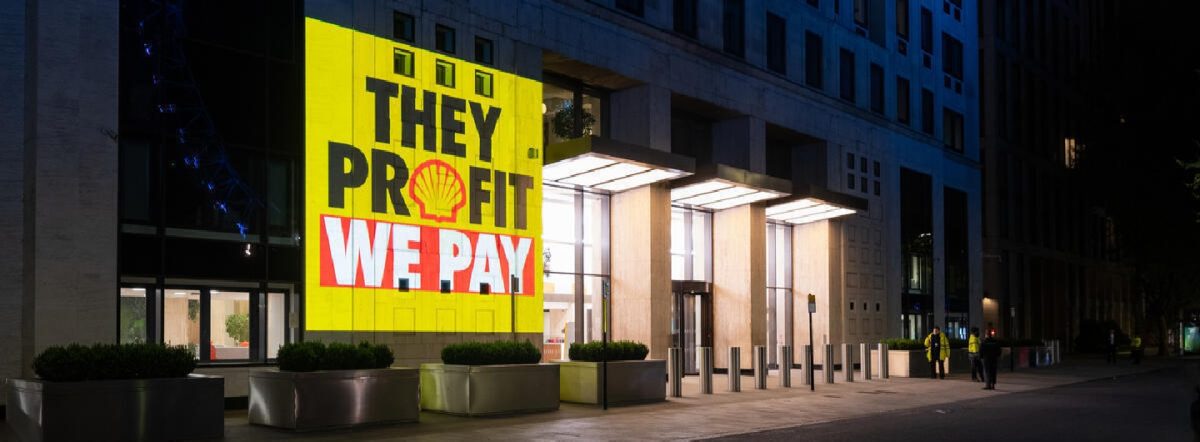
Featured image: © Greenpeace. Greenpeace activists project the truth about the source of Shell’s huge profits onto their global headquarters by the Thames in London as well as next to a Shell petrol station. The projections include the messages “They Profit We Pay”, “War Profiteers”, “At Least We are Making Billions”, “War Profits HQ” and “Making a killing”.