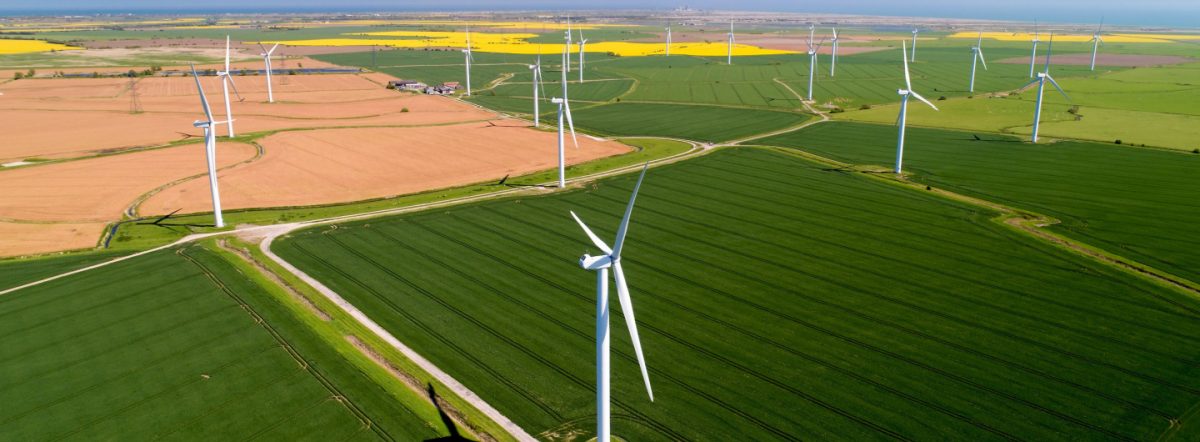

More renewables approved with 10,000 jobs supported

Ministers have announced the largest ever procurement of solar projects in the UK alongside new onshore wind farm developments and three new tidal energy projects.

Taken together with previous announcements on offshore wind results, the Government has estimated that the announcements since 2024 will deliver enough power for the equivalent of 16 million homes.

The “strike price” for the new onshore wind has been agreed at £72.24 per mega watt hour generated (/MWh) and new solar at £65.23/MWh. The new plans will support around 10,000 jobs.

A spokesperson for the End Fuel Poverty Coalition, commented:

“Households are still paying the price for years of exposure to volatile gas markets. Cheaper, homegrown renewables don’t just help the planet, they can help cut bills by pushing expensive electricity from gas-fired power stations off the system.

“A comparison with fossil fuel generated electricity puts into perspective the deal households get from renewables. Any new gas-fired power stations generate energy at close to £150 per megawatt hour, whereas the last offshore wind auction came in at around £90/MWh and today’s auction strike prices are even lower.

“But affordability must be guaranteed, not assumed. As more private investment flows into clean power, consumers need transparency on how these contracts affect bills, clear limits on profits and further electricity pricing reform so the benefits are passed on to households.”

The announcement comes after Ministers also confirmed £1bn in funding for new community energy projects which the End Fuel Poverty Coalition described as having “real potential to help bring down bills while keeping the benefits of clean power rooted in local places.”


Investment aims to boost community energy schemes

The Government has announced a £1 billion “local power plan” to expand community-owned clean energy projects across the UK, from solar panels on public buildings to small-scale hydro schemes.

Ministers have called the plan “the biggest ever investment in community energy.”

A spokesperson for the End Fuel Poverty Coalition, commented:

“This boost for community energy has real potential to help bring down bills while keeping the benefits of clean power rooted in local places.

“For too long, households have been trapped paying the price of a broken energy system where profits flow out to major companies, while communities living in cold, damp homes see little return. Community-owned renewables can start to change that, cutting costs, strengthening energy security and generating income for vital local services.

“But clean energy should not just be about new generation, it must also be about guaranteeing warmer homes, lower energy bills and building a better energy system.”

Wind power set for further investment

The government has unveiled its long-awaited Contracts for Difference “AR7 budget” for offshore wind, with £900 million for fixed projects and £180 million for floating wind.

The announcement comes as new UCL research shows wind power has already saved UK consumers billions, cutting wholesale prices and shielding homes from volatile gas markets.

Yet with strike prices of £113/MWh for fixed wind and £271/MWh for floating, concerns remain that bills may increase, while ministers insist that the government “won’t buy at any price.”

A spokesperson for the End Fuel Poverty Coalition, commented:

“The North Sea is running out of gas and new gas power plants could take the best part of a decade to even get off the ground. Britain simply can’t rely on fossil fuels for its energy security.

“That’s why renewables are so important. They cut our dependence on gas imports and prices and create jobs where they’re needed most. But this transition has to be managed fairly.

“The public deserve to clearly see how they benefit, through lower electricity prices, greater transparency on how the strike prices work, and clear profit caps that ensure developers don’t cash in at consumers’ expense.”

Blair Institute’s ‘reset’ plan risks powering delay, not progress

A new report from the Tony Blair Institute for Global Change backs calls for a “reset” of the UK’s electricity strategy, but critics warn it could play into the hands of those seeking to slow down clean-power investment.

A spokesperson for the End Fuel Poverty Coalition welcomed “any serious discussion about how to make our energy transition smarter, faster and fairer,” but also commented:

“Given that by 2027 the North Sea will no longer be able to provide enough gas to heat our homes, this report must not become a pretext to delay vital moves to improve energy security and bring down bills.

“Scrapping contracts for green power, weakening support for renewables or backing away from decisive grid upgrades will continue to keep households locked into volatile fossil-fuel markets and higher bills.

“The report’s conclusions also raise questions about the Tony Blair Institute’s funding and affiliations. As reported by The Guardian, the Institute has received financial support from governments and entities linked to fossil fuel-producing states, including Saudi Arabia and the United Arab Emirates.”

Ed Matthew, UK programme director for the independent climate change think tank E3G said:

“The only solution to get off the gas price rollercoaster is to get off gas.

“Our research shows that it is possible for the Government to reach its 2030 clean power target whilst reducing electricity bills by more than £200.

“But that requires urgent action by government to implement cost cutting policies, including moving levies off electricity bills into the Exchequer [general taxation].”

Jess Ralston, energy analyst at the Energy and Climate Intelligence Unit (ECIU), added: “The public may be more interested in their energy bills than what percentage of clean power the UK reaches in 2030, but renewables are already lowering wholesale power prices by around a quarter, or £25 per megawatt hour.”

Trump’s fossil fuel fantasy won’t cut UK energy bills

Donald Trump has reignited his war on popular wind power during his UK state visit and urging Prime Minister Sir Keir Starmer to exploit North Sea gas.

At a joint press conference, the US President repeated his “drill, baby, drill” mantra, while Sir Keir struck a more cautious note, stressing a “pragmatic” mix of fossil fuels, renewables and nuclear in the UK’s energy future.

A spokesperson for the End Fuel Poverty Coalition, commented:

“The President remains steadfast in towing the line of his fossil fuel backers who are gaslighting the British public about our energy future.

The truth is, the North Sea is running out of gas – we have burned most of it. By 2027 it won’t even produce enough to heat our homes and only 14% of its original reserves remain commercially viable.

“No amount of bluster about drilling or fracking will bring back cheap gas, all it does is lock households into more reliance on volatile global gas markets.

“The UK is leading the way and showing the world that scaling up renewables and upgrading homes is the fastest, cheapest route to lower bills and lasting energy security.

“Of course we need to go further to bring down bills by reforming electricity pricing, but this won’t be achieved by importing Donald Trump’s fossil fuel agenda.”

Subscribe for free for more updates.

Awareness week set to celebrate renewable ways to end fuel poverty

The Great Big Green Week (10th – 18th June) is a UK-wide celebration of community action to tackle climate change. 

While the energy industry lobbies for the continuation of oil and gas, including opposing the Windfall Tax on excess energy firm profits which is used to tackle fuel poverty, experts have predicted that renewable energy sources completely replacing fossil fuels by 2050 will save trillions of dollars globally.

Labour has announced plans to block all new oil and gas development in the North Sea if they are elected, in a move which has been welcomed by 139 organisations including the End Fuel Poverty Coalition. These organisations have signed an open letter to Labour leader Sir Keir Starmer urging him not to U-turn on this policy, citing the importance of investing in renewables in ensuring that the UK has secure access to affordable and green sources of energy. 

The Government is also examining how best to reform of electricity marketing and pricing which calculates how electricity costs are determined. Currently, costs per unit are calculated by “marginal pricing”, meaning that the price per unit (kWh) of electricity is determined by the last energy source delivered onto the grid to meet demand in any given half hour period. In practice, this is often determined by the cost of energy from expensive gas power stations, rather than cheaper renewables. 

The End Fuel Poverty Coalition responded to this consultation by urging the government to unlink the cost of energy from gas prices, and better factor in renewable energy to help mitigate price volatility and drive energy bills down.  

Community schemes are becoming vital ways to promote renewables at a local level. One such scheme is Net Zero Now in South Cambridgeshire, which is a free training programme for local residents. The scheme is designed to support individuals to act on climate change in their community, and consists of six weekly workshops where attendees learn from each other to deliver effective carbon reduction activities, events and communications. Local schemes such as this one are being celebrated during Great Big Green Week, as it has been found that these programmes help to lower emissions and restore nature within communities. 

A spokesperson for the End Fuel Poverty Coalition commented:

“The Great Big Green Week asks us to think about what inspires us to tackle climate change and protect nature. For millions of people, the answer is that tackling climate change is also how we end fuel poverty in the long run. We already have solutions ready to do this. For example, reforming the energy grid and adopting renewable energy sources will contribute to the achievement of net zero, but would also mean more affordable bills. Additionally, improving our homes to be more energy efficient could reduce heating bills by 20%.